
SSP&A conducted a geochemical investigation of arsenic mobility at a former phosphate mine and manufacturing facility to demonstrate the effectiveness of monitored natural attenuation (MNA) as a remedial strategy for groundwater.

SSP&A conducted a geochemical investigation of arsenic mobility at a former phosphate mine and manufacturing facility to demonstrate the effectiveness of monitored natural attenuation (MNA) as a remedial strategy for groundwater.

Between 2014 and 2017, SSP&A was the lead environmental consultant for a comprehensive Due Diligence Investigation (DDI) of the Bannister Federal Complex (BFC) in Kansas City, Missouri. For more than 60 years, the 300-acre BFC complex served the nation, first as a WWII-era aircraft manufacturing and testing facility, and subsequently as a secure, high-tech plant producing mechanical and electronic components for national defense systems.
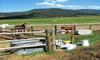
SSP&A has conducted several field sampling programs, groundwater and gas geochemistry evaluations, and water-resource studies related to the development of oil and natural gas resources in the Piceance Basin, Colorado.
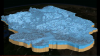
YouTube Video Documents Resource Concerns Tackled by the GWMA
Evidence has been mounting for several years that groundwater resources in Adams, Franklin, Lincoln and Grant Counties of Washington State are declining – in some cases at an alarming rate. These resources are used for agricultural, industrial and municipal purposes and as such are a vital element of the region's economy. The Columbia Basin Ground Water Management Area (GWMA) is a grass-roots effort to further understanding of the presence, availability and utilization of groundwater resources throughout the four counties which together cover over 8,300 square miles. This understanding is already improving resource management and is positioned to support future water resource planning, including the pursuit of water supply options.
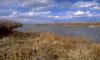
For this water supply planning study, SSP&A quantified the inter-related groundwater and surface water supply and its variability, and provided a common basis for regional and New Mexico water planning activities.

SSP&A has developed groundwater models to evaluate the migration and remediation of more than 30 large plumes dominated by MTBE on Long Island, New York. An example of the groundwater models that we have completed is the model developed of a plume at Hamption Bays, Suffolk County, Long Island.
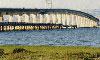
SSP&A has directed the investigation and remediation of arsenic contamination that has affected soil and shallow groundwater in this 20-acre site adjacent to San Francisco Bay that included wetland areas having both tidal and non-tidal marshes. SSP&A has conducted extensive hydrologic investigations and modeling at the site in both the shallow and deep groundwater zones to (1) assess the impacts of historic disposal practices, and (2) estimate the extent of further migration over time at the site.

On behalf of a group of water rights holders, SSP&A was asked to evaluate mapped stream depletion impacts and a proposed line of demarcation for "non-tributary" groundwater; that is, groundwater that could be withdrawn in conjunction with coal bed methane extraction without concern for the replacement of stream depletions, in accordance with State of Colorado statutory limits.
For the Confederated Salish and Kootenai Tribes of the Flathead Indian Reservation, SSP&A has prepared comprehensive groundwater assessments for three major stream-connected groundwater basins. Present uses within the groundwater basins on the Reservation include irrigated agriculture of non-Indian lands under a federal irrigation project; and, tribal priorities include maintenance of instream flows for fisheries, wetlands and cultural purposes, in addition to water use for economic development. SSP&A has been working for several years to develop and apply groundwater models to assess groundwater management approaches.
Onondaga Lake in New York, USA is one of the most contaminated lakes in the United States as the result of industrial activities along the lake for over 200 years. A remedial program is now underway to define the nature and extent of groundwater contamination, to quantify groundwater contributions to the lake, and to quantify the role of groundwater in remobilizing contaminated sediments. The groundwater system is complex because of both natural and anthropogenic brines in the subsurface. SSP&A recognized the significance of density effects on groundwater flow patterns and developed a groundwater model of the regional flow system in the vicinity of the lake using the program SEAWAT-2000.

In November 1999, the U.S. Supreme Court appointed a Special Master to oversee resolution of a dispute regarding allocation of water from the Republican River and allegations that Nebraska had violated the Republican River Compact. The Compact, signed in 1943 by the three basin states of Kansas, Colorado and Nebraska, allocates the water supply of the Republican River, with the total allocation given to each state derived from listed tributaries, and for Nebraska and Kansas, from the main stem of the Republican River. SSP&A was retained by the State of Kansas to provide technical support in quantifying the nature and magnitude of streamflow accretions and depletions from the ground water system in the Republican River Basin.

At this site where 20,000 tons of chlorinated DNAPLs were disposed, SSP&A reviewed regional and site data to develop a model of groundwater flow in the fractured rock of the Lockport Group. SSP&A constructed, calibrated, and applied the model to the Occidental Chemical Corporation Hyde Park Landfill site. SSP&A's role evolved to include all aspects of data collection work plans and data review. SSP&A's approach was to use an equivalent porous medium (EPM) approach using MODFLOW to simulate groundwater flow.

SSP&A is part of multi-firm team developing remedial alternatives and strategies for RI/FS and post-ROD activities. The team has developed and applied modeling approaches for remedy design and analysis and presented findings at Tri-Party and other stakeholder meetings. SSP&A was a member of technical team conducting a needs assessment for remedial decision modeling support at Central Plateau and River Corridor operable units.

The Mallard Lake Landfill is located in northwestern DuPage County, Illinois. The landfill began accepting a mix of municipal refuse, construction debris, sludge, and liquid waste in March 1975 and ceased accepting waste in March 1999. The DuPage County Health Department began a program in 2005 to test private wells in the county for volatile organic compounds. No chlorinated volatile organic compounds were detected in the 100 private wells sampled immediately south and southeast of the landfill, but approximately 1.7 miles southwest of the landfill, vinyl chloride and/or cis-1,2-dichloroethene were detected in 39 private wells along an approximately 2-mile long north-south corridor. SSP&A constructed, calibrated and applied a groundwater flow model to investigate the potential for the Mallard Lake Landfill to have served as the source of the chlorinated volatile organic contamination. A particle tracking method was used to investigate the movement of groundwater in the shallow aquifer in the vicinity of the landfill.